The Essential Guide to Distillery Equipment
Choosing the right distillery equipment is crucial to the success of your business, whether you’re creating a small-batch gin or a large-scale whiskey operation.
In this article, we will provide a guide to distillery equipment, covering everything from gin distillery equipment to whisky distillery equipment.
Gin Distillery Equipment
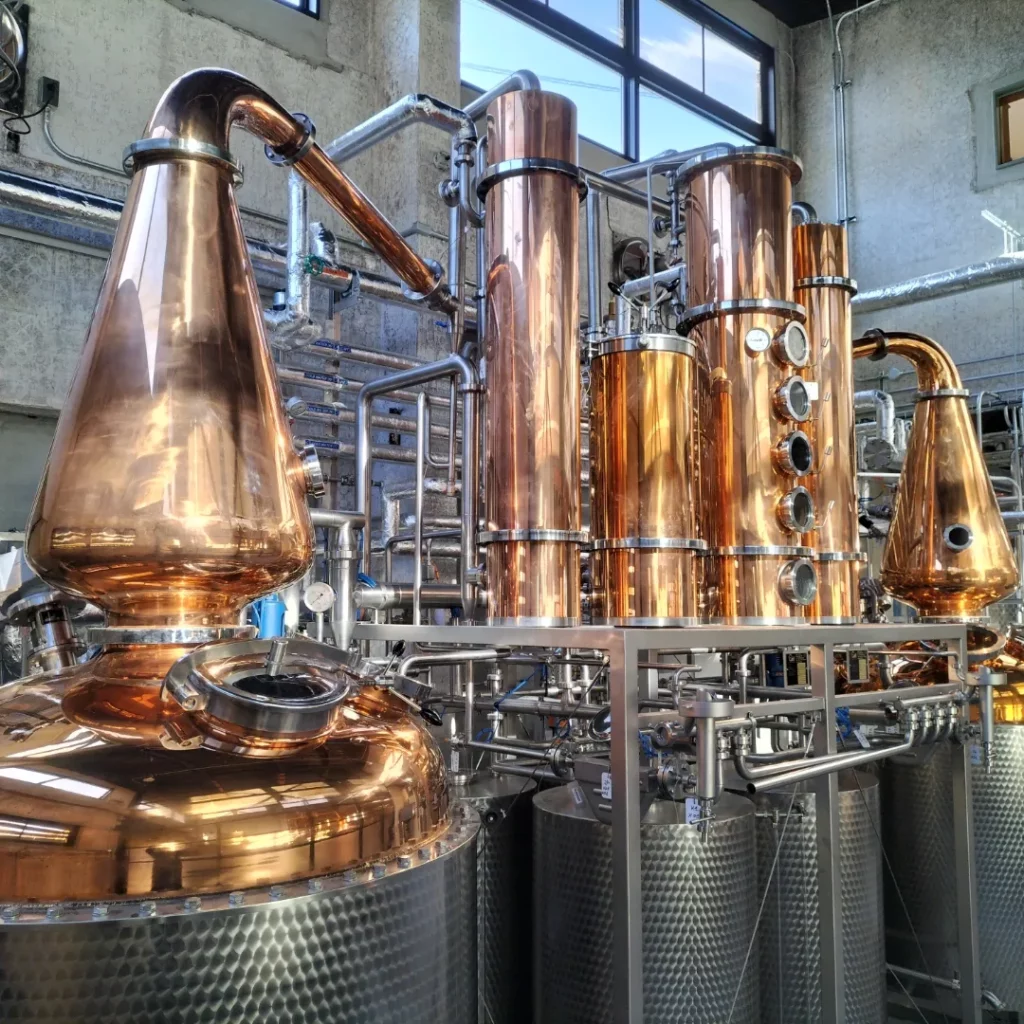
Gin is a popular spirit in Australia, and if you’re looking to start a gin distillery, there are a few key pieces of equipment you’ll need. First and foremost is a still, which is used to heat and distill the alcohol. There are a variety of stills on the market, including pot stills, hybrid stills and column stills, each with their own benefits and drawbacks.
Pot Stills & Hybrid Stills
A pot still is the simplest and oldest form of still used in distilling. It consists of a large pot, or boiler, that is heated to boil the alcohol-containing liquid, producing steam. The steam then rises through a narrow neck and condenses on a cooler surface, such as a copper coil, where it becomes a high-proof distillate.
The key characteristic of a pot still is that it produces a more flavorful, full-bodied distillate. This is because during the distillation process, the alcohol vapors carry with them some of the flavors and aromas from the original liquid, which are then concentrated in the final distillate.
Hybrid stills are a modern take on the classic pot still. They combine the traditional pot still design with additional features, such as a fractioning column, to allow for greater control over the distillation process. Hybrid stills can produce a range of different styles of spirits, from full-bodied whiskies to lighter, more refined vodkas.
Column Stills
A column still, on the other hand, is a more complex piece of equipment that allows for greater control over the distillation process. It consists of a series of tall, vertically stacked chambers or plates that allow for the vapor to rise and condense multiple times before reaching the final collection point.
The benefit of a column still is that it can produce a higher-proof distillate with a lighter, more neutral flavor profile. This is because the multiple distillations allow for greater separation of the alcohol from other compounds, resulting in a cleaner, more pure final product.
However, one potential drawback of a column still is that it may not retain as much of the original flavors and aromas from the raw materials as a pot still would. This is because the multiple distillations and the tall column can remove some of the more volatile flavor compounds from the final product.
Additionally, column stills are typically more expensive and complex to operate than pot stills. They require precise control over factors such as temperature and pressure, and may require more maintenance and cleaning than simpler pot still designs.
Additional Distillery Equipment
Tanks
Tanks are an essential piece of equipment in any distillery. They are used for a variety of purposes, including storing raw materials such as grain and yeast, fermenting the mash, and storing the finished product before packaging. Tanks come in a range of sizes and materials, from small plastic fermenters to large stainless steel storage vessels.
Packaging Equipment
Once the spirit has been distilled and aged, it needs to be bottled and packaged for sale. Packaging equipment includes everything from bottling machines to labeling and capping equipment. The type of packaging equipment required will depend on the size and scale of the distillery’s operation.
Pumps
Pumps are used to move liquid between different parts of the distillery, such as transferring the mash from the mash tun to the fermenter or moving the finished product from the storage tanks to the bottling line. There are different types of pumps available, including centrifugal pumps and positive displacement pumps, each with its own benefits and drawbacks.
Other distillery equipment may include boilers for heating the mash, cooling systems to control fermentation temperatures, and filtration equipment to remove impurities from the finished product. The specific equipment required will depend on the type of spirit being produced and the size and scale of the distillery’s operation.
Distillery Equipment for Other Spirits
The specific equipment required will vary depending on the type of spirit you’re producing. For example, whiskey distillers typically use pot stills to produce their spirits, but a hybrid or column still can also be used depending on the desired flavor profile. Additionally, a mash tun is typically required to convert the grain into a sugary liquid, which is then fermented and distilled. Other equipment such as fermenters, tanks, and pumps may also be required, depending on the scale of the operation and the specific production process
Where to Buy Distillery Equipment in Australia
There are a number of suppliers of distillery equipment in Australia, both locally and internationally. When selecting a supplier, it’s important to consider factors such as price, quality, and customer support.
Overall, selecting the right distillery equipment for your operation is crucial to producing high-quality spirits efficiently and effectively. At Strikewater Consulting, we have the experience and expertise to help you select the right equipment for your needs and budget, and to optimize your distilling process for maximum productivity and quality. Contact us today to learn more about our services and how we can help you achieve your distilling goals.